Thank you to the teachers, students and museums who have taken our kits into real classrooms and exhibit halls, and filmed what happens. These clips are theirs, on real tables, with real students.
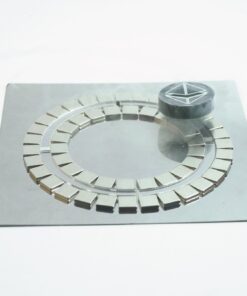
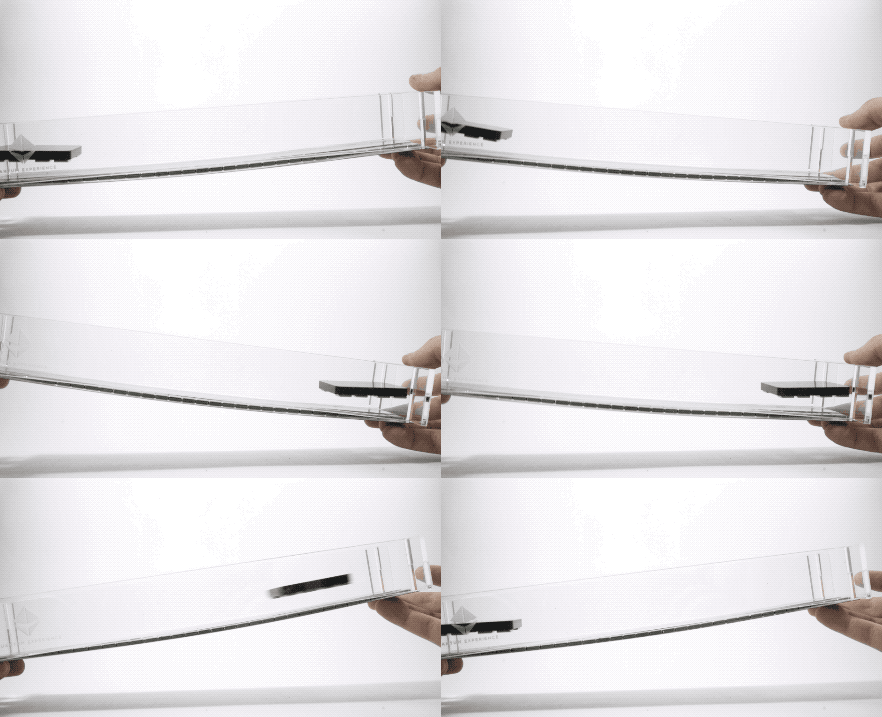
Keith Ramsey, who posts as RamZland, filmed 6th grade students at Bridgeport Elementary in Indianapolis in 2020, gathered around our 40 cm round track to look at a YBCO disc and how it pins in place. After the first lift, ask why the disc stays put when the track is tilted: that is the pinning, not just the lift.
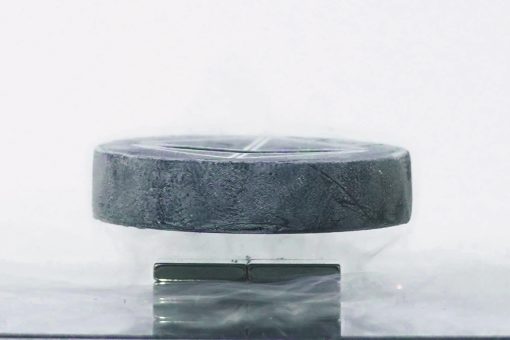
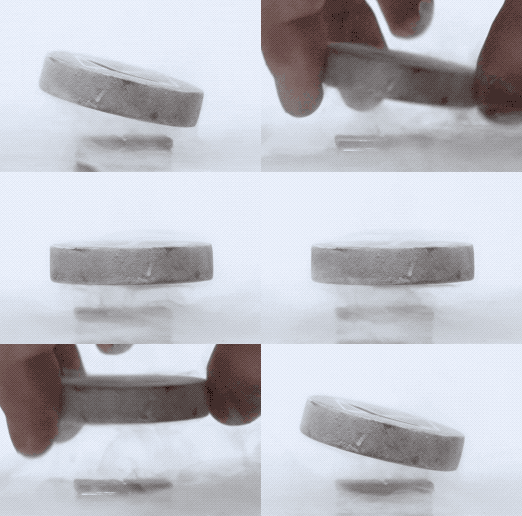
At the same school, Science Bowl students work with the handheld magnetic device, a disc locked just above the magnets. Once the levitator is cool, pass the handheld device to small groups instead of keeping the demo at the front table.
The handheld magnetic device is included in the Starter Kit.
James Lincoln made this video abstract for The Physics Teacher (November 2017, companion article) on using superconductors in a high school lab, with a close look at our handheld magnetic device and thin-film levitators. If you need a short clip to show a colleague that this belongs in a high school lab, start here.
University of Guelph nanoscience student Josh Van Der Zalm shows a ceramic disc that locks in the position he chooses, rides a circular magnetic track and hangs in mid-air. Let one student run the handheld demo for the class while another narrates what is happening, then swap.
STEM educator Levent Sakar posted this for STEM SOS Physics, with a group gathered around our round maglev track on its wooden stand in a school lab. Treat the track as a shared station: a few students work there at a time, then the groups rotate.
In 2016 we demonstrated levitation in the exhibit hall at the AAPT Summer Meeting in Sacramento, California, and the physicsteachers channel filmed our round track on its wooden stand. If you have wondered whether other physics teachers take this seriously, this is a room full of them looking at the same kit.
LancasterOnline filmed the North Museum of Natural History and Science in Lancaster, Pennsylvania, previewing a superconducting disc on a circular magnet track that the museum purchased from Tel Aviv University. The educator adds a piece of foam and plastic wrap to keep the disc cold longer between dips; stay with an open tray and follow the liquid nitrogen guide.
If you want a track like this for a museum floor or a travelling demo, start with the Outreach Program Package, which includes a 40 cm round maglev track on a wooden stand.
Scott Simpson posted this 39-second chemistry demonstration of quantum locking and levitation, funded by the US National Science Foundation (proposal 2142874), placing a disc with tweezers onto our circular magnet track. If you teach chemistry, use a short locking demo as a lesson opener: one lock, one question, then back to the lesson.
Italian educator Magnetic Games reviewed two of our kits: a superconductivity kit (magnets, spacers and a YBCO superconductor; you supply the liquid nitrogen) and a magnet-only levitation train, by repulsion, with no liquid nitrogen. If you want a close-up look at how the experiments run on the table, this is the most detailed third-party review we have found.
Two older clips are still the ones people send us when they first see the effect. They are not classroom videos, but they are the origin of the kits above.
Our June 2011 lab recording shows a superconducting disc locked above or below a set of permanent magnets, a phenomenon we then called quantum trapping. The description points to quantumlevitation.com.
Filmed at the 2011 ASTC Annual Conference in Baltimore, hosted by the Maryland Science Center, this is a Tel Aviv University demonstration of a superconductor locked in a magnetic field, including the track and upside-down levitation. The video is courtesy of the Association of Science and Technology Centers.
Plan the lesson
Every superconducting demo here uses liquid nitrogen. Read our liquid nitrogen guide first for where to get it, what it costs, and how to handle it safely.
You do not need to buy a kit to start planning the lesson. The free classroom pack has the teacher guide, a 45-minute lesson plan and five ready-to-run class experiments, and the for teachers page has the outline.
To provide the best experiences, we use technologies like cookies to store and/or access device information. Consenting to these technologies will allow us to process data such as browsing behavior or unique IDs on this site. Not consenting or withdrawing consent, may adversely affect certain features and functions.
Functional
Always active
The technical storage or access is strictly necessary for the legitimate purpose of enabling the use of a specific service explicitly requested by the subscriber or user, or for the sole purpose of carrying out the transmission of a communication over an electronic communications network.
Preferences
The technical storage or access is necessary for the legitimate purpose of storing preferences that are not requested by the subscriber or user.
Statistics
The technical storage or access that is used exclusively for statistical purposes.The technical storage or access that is used exclusively for anonymous statistical purposes. Without a subpoena, voluntary compliance on the part of your Internet Service Provider, or additional records from a third party, information stored or retrieved for this purpose alone cannot usually be used to identify you.
Marketing
The technical storage or access is required to create user profiles to send advertising, or to track the user on a website or across several websites for similar marketing purposes.