Science kits for kidsthat do not look fake.
No slime, no baking soda volcano. A real magnet, really floating, held in mid-air by physics your child can explain by the end of the afternoon.
Build it, run it, then work out why it works.
Every clip below is our own kit on our own bench — no animation, no compositing, nothing sped up. This is what arrives in the box.
Build the track
Panels, rails and end pieces, assembled by hand in about twenty minutes. No tools, no glue, nothing that can only be done once.
Send it down the line
One push and the puck runs the whole track without touching it. This is the moment most children stop and ask their first real physics question.
Tilt it, and watch it hold
Turn the whole thing on its side and the magnet stays exactly where it was. That is flux pinning — and it is the part no toy can fake.
One question decides everything: can you get liquid nitrogen?
It sounds like a barrier and usually is not — but the honest answer changes which kit you should buy, so answer it first.
Tap your answer to see the kits that fit.
Magnet kits, from $69
Permanent magnets only. Real levitation, real physics, no cryogenics and no special handling beyond ordinary magnet sense. This is the right first kit for most families.
Show me the magnet kits Yes — then go furtherSuperconductor kit, from $139
Quantum locking: a magnet frozen in mid-air at any angle, even upside down. Needs about half a litre of liquid nitrogen and an adult to pour it. It is the demonstration nobody forgets.
Show me the superconductor kitLiquid nitrogen is sold by welding suppliers and gas depots in most towns, usually for a few pounds a litre. The sourcing guide shows how to find a supplier near you and what to ask for.
Three kits, priced on this page.
Short list on purpose. Each one is built around a single demonstration rather than sold as a box of parts.
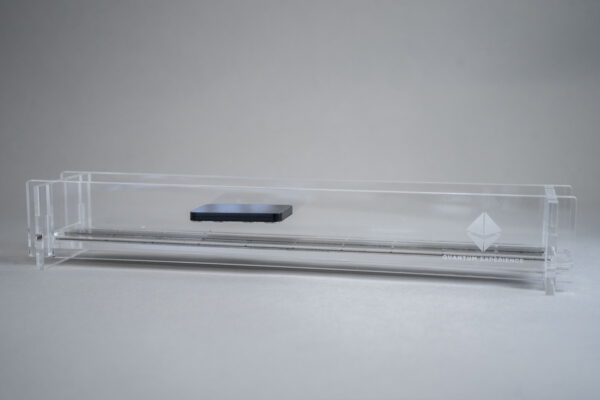
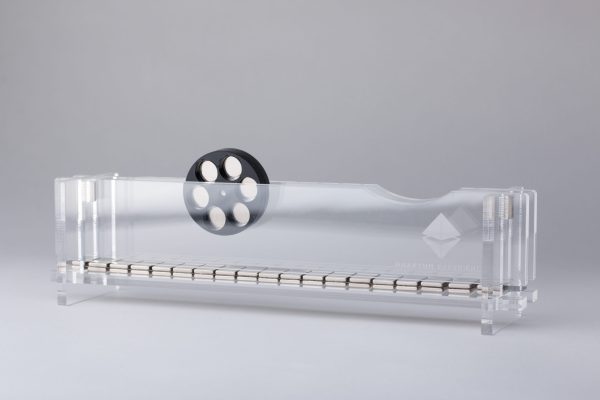
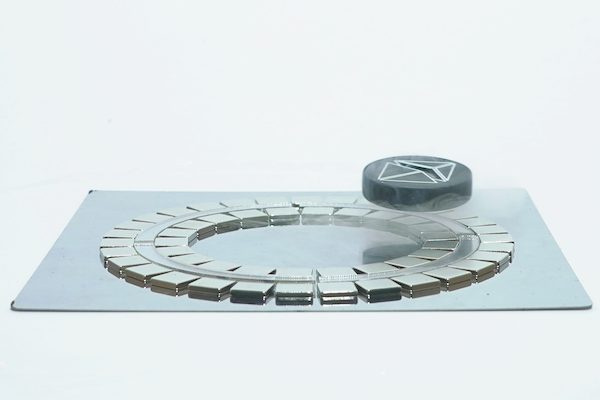
Which one, for which child.
| Your situation | Kit | Price | Why this one |
|---|---|---|---|
| First science kit, no idea where to start | DIY Maglev Desktop Toy | From $69 | Works out of the box, lives on a desk, keeps being played with after day one. |
| There is a science fair and it needs a written-up experiment | Magnetic Train Science Fair Kit | From $69 | Same physics, but framed as something a judge can follow and a child can measure. |
| Already hooked on physics, wants the real thing | Science Fair Superconductivity Kit | From $139 | The only one that shows genuine quantum locking. Needs liquid nitrogen and an adult. |
| Buying for a whole class | See the teachers’ guide | Quote | Class sets, lesson plans and a risk assessment template. |
What a parent should know before it arrives.
Written plainly, because these are real magnets and real cryogenics rather than a toy pretending to be science.
- DoLet the child run the experiment
Adults pour the nitrogen; the child handles the cooled superconductor, the magnets and the track. That division keeps it safe without turning it into a demonstration they only watch.
- DoSupervise magnet handling, every time
These are strong neodymium magnets, not fridge magnets. They can pinch fingers hard, and they will wipe a bank card or disturb a screen if left next to one.
- NeverLet a child pour liquid nitrogen
Adult job, no exceptions, with gloves and eye protection. It boils at −196 °C and will cause a cold burn on contact with skin.
- NeverSeal nitrogen in a closed container
One litre of liquid becomes 694 litres of gas. It must stay in a vented dewar or an open flask — never a bottle, never with a lid on.
- NeverLeave the magnets near a child under ten
Swallowed magnets attract through the gut wall and are a surgical emergency. This is the one risk on this page that has nothing to do with the physics.
Building it for a school project? The hoverboard science fair guide walks through turning the demonstration into a proper experiment with a measurement and a result.
What parents ask before buying.
Where do I actually get liquid nitrogen?
Is this safe for a ten-year-old?
Which kit is best for a science fair?
How long does the levitation last?
Do we need anything that is not in the box?
Will a child actually understand what is happening?
Buying for a class, not a child?
Class sets, a ready-made lesson plan, kit recommendations by group size and a risk assessment template you can hand straight to a head of department.