Search for a superconductor or levitation kit and the results run from $25 toys to four-figure lab apparatus, often described in nearly identical language. The differences are real and easy to state. This guide sorts the market into four categories by what is physically in the box and what each can demonstrate — so you can match the kit to the project, not the marketing.
What you are actually paying for
Four things separate a $25 kit from a $1,000 one: whether there is a superconductor in the box at all (and whether it is a single-domain YBCO levitator or a weaker sintered disc), the magnets (an engineered track versus a single cube), the cooling provisions (a foam bath and handling tools, or nothing), and whether the kit can produce measurements rather than only a spectacle.
Category 1 — permanent-magnet maglev kits (~$25–$150, no liquid nitrogen)
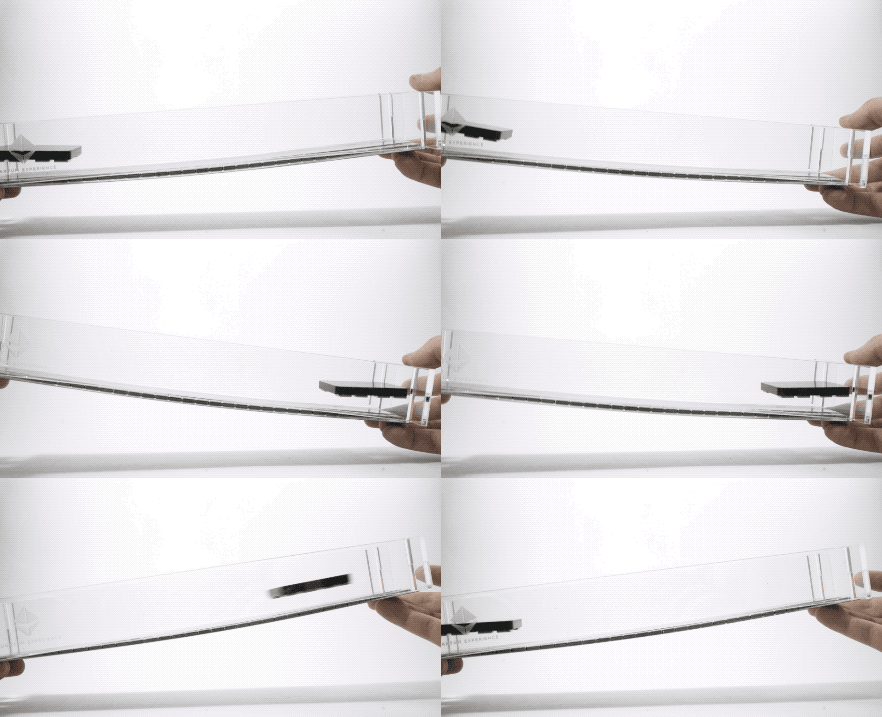
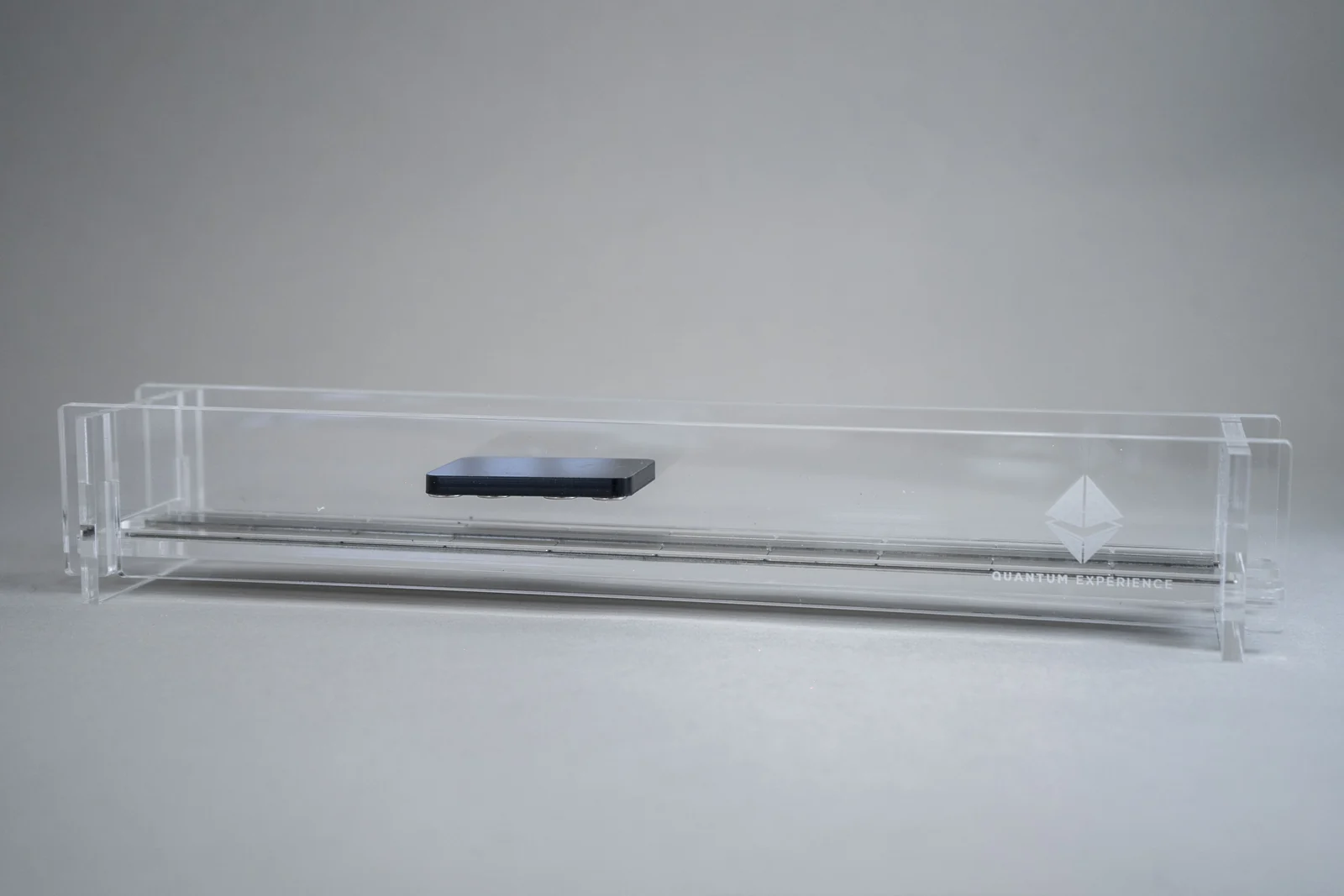
No superconductor: levitation by permanent-magnet repulsion, stabilised by guide rails, because Earnshaw’s theorem forbids stable static levitation with magnets alone. Toy-grade versions demonstrate the idea; the physics available for an actual project depends on magnet quality. Our Magnetic Train Science Fair Kit sits at the top of this category: a levitating vehicle on a magnet track, strong enough to carry measurable payloads — which turns it into a real levitation-height-versus-load experiment, with no cryogenics and no safety approvals.
 Kit for this projectScience Fair Superconductivity KitFrom $139.00Ships in 1–3 daysView the kit →
Category 2 — basic superconductor demonstration kits (~$139–$180)
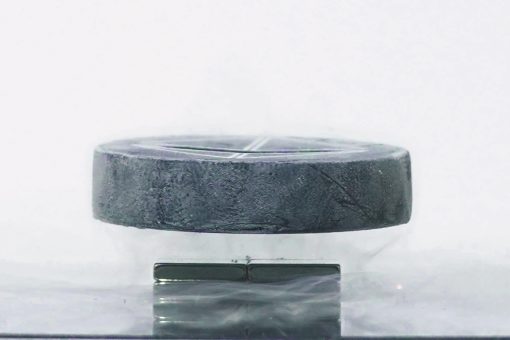
A YBCO disc, a magnet and tweezers. This is the format most distributor-listed “economy superconductivity kits” share, at similar prices. What varies is the superconductor itself and where the kit comes from: we manufacture ours, so the Science Fair Superconductivity Kit (from $139) uses our own levitators, can be upgraded at purchase with a stronger levitator and a magnetic track (up to $399), and every part — including the disc, which is a consumable if handled roughly — is available as a spare rather than a reason to rebuy a kit.
Category 3 — maglev track kits (~$400–$1,500)
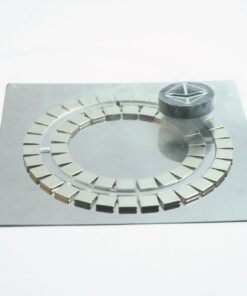
The demonstration that wins rooms: a field-cooled superconductor locked above a circular magnetic track, moving with almost no friction, upside down if you like. The Mini Maglev Kit is the portable entry point; the Ø72 cm Maglev Kit is the full-size version built for classrooms and outreach audiences.
Category 4 — quantitative kits (~$500–$1,150)
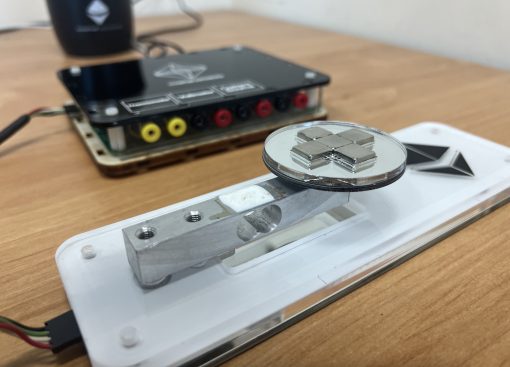
Where a demonstration becomes an experiment. The Meissner Effect & Flux Pinning Force Experiment Kit ($899–$1,149) measures pinning force with interchangeable magnetic heads and exports the data for analysis; the 4-point critical-temperature setup measures the superconducting transition itself. If the goal is a science fair judged on method and data rather than spectacle, this category — or the kitchen-scale method in our flux-pinning force experiment guide — is the honest recommendation.
The short version
- Young students, or no liquid nitrogen allowed: Magnetic Train Kit — real project, zero cryogenics.
- First superconductor, tight budget: Science Fair kit from $139 — take the track option if the budget stretches; it multiplies what you can demonstrate.
- Classroom or outreach spectacle: a maglev track kit.
- Competitive science fair: the force experiment kit, or an economy kit plus the measurement method.
Anything with a superconductor needs liquid nitrogen — cheaper and easier to get than most people expect; the liquid nitrogen guide covers sourcing and safety. Still unsure? The which-kit guide matches kits to age, budget and facilities in five questions.