Starter Kit
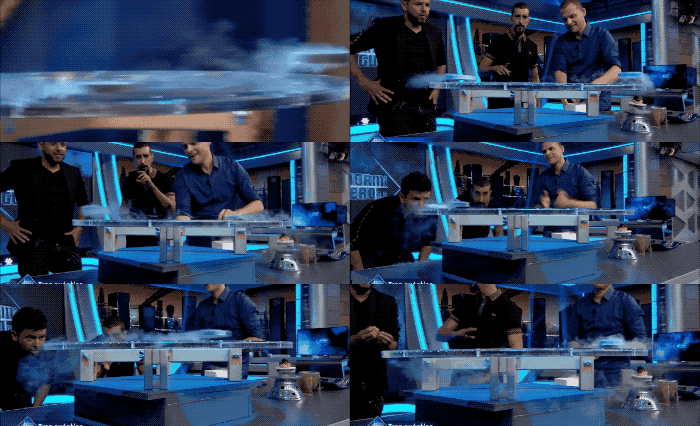
The Starter Kit is the fundamental, entry level kit for classroom demonstration of Quantum Levitation and Flux Pinning.
What it does.
Cool the levitator in liquid nitrogen for about a minute, set it above the magnets, and it stays where you put it. It is not balancing. Flux pinning locks the disc onto the magnetic field lines threading through it, so you can slide it sideways, tilt it, or turn the whole assembly upside down and it holds its position.
This is the smallest complete version of that demonstration and the one most classrooms start with. It ships warm and dry, sets up in a couple of minutes, and needs roughly half a litre of liquid nitrogen per session in a shallow open tray.
Four experiments in the box
1. The Meissner effect. Soak the levitator in liquid nitrogen, logo face down. Lower a small magnet towards it from about 3 cm and let go: the magnet is repelled and falls aside. Push it a few millimetres further into the field and it levitates, wobbling as it goes. In the Meissner state the superconductor is diamagnetic, magnetised in opposition to the field applied to it, so the repulsion is real but unstable, exactly like two magnets pushed together.
2. Quantum locking. Place the cooled superconductor above the magnetic setup and it locks in mid-air. Try to move it in any direction and you feel the pinning force resist. Turn the whole thing over and it stays. This is what separates flux pinning from simple repulsion: the levitator is fixed in three dimensions, not balanced in one.
3. Frictionless motion. Lock the levitator above the pair of ring magnets. It rotates freely around the axis of the magnets but is locked in every other direction. Shift it sideways first, so the class can see that it turns around the magnet axis and not around its own centre. The superconductor moves freely for as long as the magnetic flux inside it does not change.
4. The demonstration in reverse. Cool the levitator face down, superconductor side up, and bring a small disc magnet close to the surface. Now the magnet is the thing levitating, stable above the superconductor and free to spin on its axis without friction.
Handling it safely
The kit uses neodymium magnets strong enough to injure a hand caught between them. Keep them away from other magnetic material and away from sensitive electronics, and handle the cold superconductor with the plastic tweezers supplied rather than with fingers. Liquid nitrogen goes in a shallow open tray or dewar, never a sealed container. Our liquid nitrogen guide covers sourcing, cost and a risk-assessment template.
What’s in the box, and what isn’t.
- IncludedStarter Kit
- IncludedUser manual and setup guide
- IncludedPlastic tweezers
For handling the superconductor while cold
- You supplyLiquid nitrogen
≈0.5 L per demonstration · $1–3 per litre
- You supplyShallow tray or dewar
Never a sealed container
- You supplyCryogenic gloves and eye protection
Standard for any LN2 handling
| SKU | 303 |
|---|---|
| Weight | 0.65 kg |
| Dimensions | 25 × 12 × 8.5 cm |
| Levitator dimensions | Enhanced 4.5×1.5 cm [ØxH], Large 7 x 1 cm [ØxH], Standard 4.5×0.8 cm [ØxH] |
Sourcing, cost and safety — plus a risk-assessment template for your safety officer.
Ordering more than one?
Departments buying six or more get volume pricing and a single consolidated invoice. Quotes in one business day, purchase orders accepted, tax documentation on request.
Often bought with.
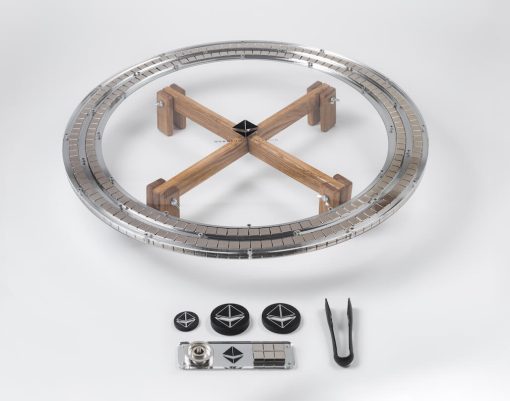
Quantum Levitation Maglev Kit
Turn quantum levitation into a show for the whole room. Superconducting levitators…
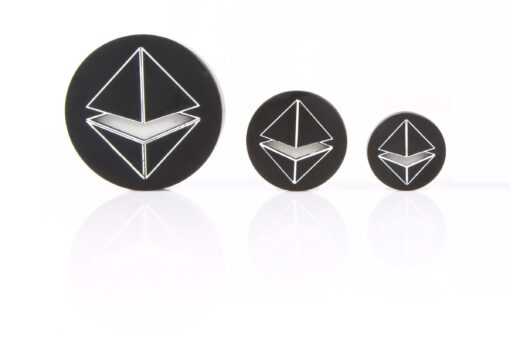
Quantum Standard Levitators
The Quantum Levitators are intended for science demonstrations. They are easy to…
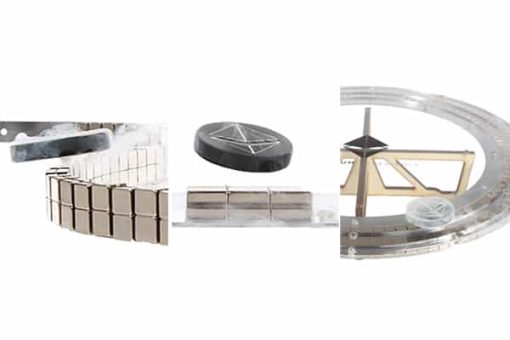
Outreach Program Package
Bring Quantum Levitation & Locking to the people. The ultimate outreach package…