Meissner Effect & Flux Pinning Force Experiment Kit
Explore the magnetic forces between magnets, superconductors and metals.
What it does.
A superconductor and a magnet push each other apart, and then, closer in, pull each other together. This kit puts a force sensor underneath the magnets so students can watch both happen on a graph, in real time, instead of taking it on trust.
The force balance connects to a computer over USB-C. In Chrome, go to quantumlevitation.xyz, press Connect, choose the USB option and pick the Force experiment. Force readings stream to a live graph and the raw data downloads for offline analysis, so the measurement can be written up as a real lab report rather than shown as a demonstration.
Experiment 1 — the Meissner effect
Set the ring magnets on the force balance and lower a room-temperature levitator towards them. Nothing happens: there is no force at all between a warm superconductor and a magnet. Now cool the same levitator in liquid nitrogen, wait for the bubbling to subside, and lower it again. A repulsive force appears and grows as the gap closes, then disappears the moment you lift the superconductor away. Repeat the approach, stopping a little closer each time, and the peak repulsion climbs with every run.
Question to set: is there a maximum? What does this force depend on?
Experiment 2 — flux pinning, the force that pulls back
Now go closer still, to within a few millimetres, and watch the graph on the way back up. The force does not fade to zero. It goes negative: the superconductor is pulling the magnets after it. That cannot be the Meissner effect, which can only ever repel.
What the sensor is recording is quantum locking. Magnetic flux threads the superconductor at its weak spots, regions where superconductivity is suppressed, because sitting there costs the system the least energy. Moving that flux out again costs energy, and a gradient in energy is a force. The closer the approach, the deeper the pinning, and the larger the negative force on the way out.
Where it goes next
Change the magnetic setup and run the whole measurement again: the ring magnets, a single cube magnet, four cubes polarised the same way, and four cubes in a checkerboard. Each arrangement produces a different field gradient, and a different pinning force.
Question to set: which arrangement gives the strongest pinning, and why?
What you need
The kit supplies the force balance and its USB-C cable, ring and rectangular magnets, a Quantum Levitator and plastic tweezers. You supply a computer running Chrome and roughly half a litre of liquid nitrogen per session, in a shallow open tray or dewar and never a sealed container. See the liquid nitrogen guide. The neodymium magnets are strong enough to injure a hand caught between them: keep them clear of other magnetic material and of sensitive electronics.
What’s in the box, and what isn’t.
- IncludedMeissner Effect & Flux Pinning Force Experiment Kit
- IncludedUser manual and setup guide
- IncludedPlastic tweezers
For handling the superconductor while cold
- You supplyLiquid nitrogen
≈0.5 L per demonstration · $1–3 per litre
- You supplyShallow tray or dewar
Never a sealed container
- You supplyCryogenic gloves and eye protection
Standard for any LN2 handling
- SKU
- 410
| Levitator dimensions | |
|---|---|
| Liquid nitrogen Dewar | not included, included |
Sourcing, cost and safety — plus a risk-assessment template for your safety officer.
Ordering more than one?
Departments buying six or more get volume pricing and a single consolidated invoice. Quotes in one business day, purchase orders accepted, tax documentation on request.
Often bought with.
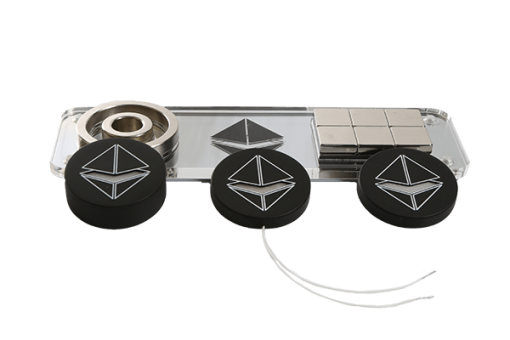
Starter Kit
The Starter Kit is the fundamental, entry level kit for classroom demonstration of…
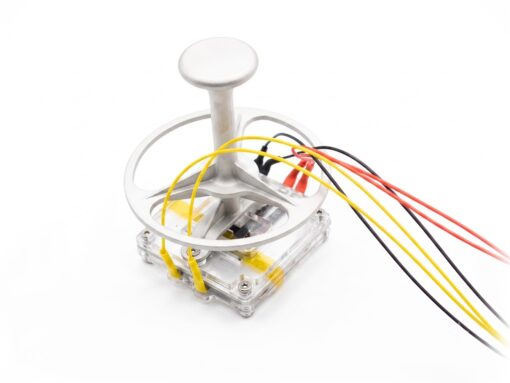
Superconductor Critical Temperature (Tc) Experiment setup (upgraded)
Measure the critical temperature (Tc) of a high-Tc superconductor with this easy-to-use…
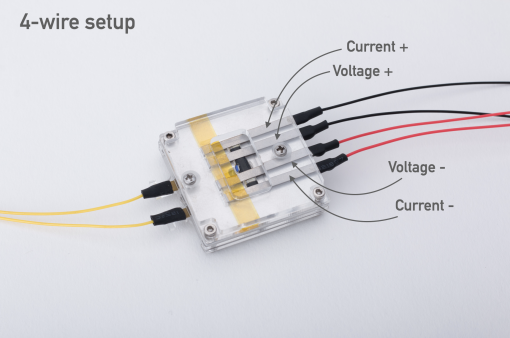
Superconductor bar for 4-point Tc Experiment
High-Tc Superconductor bars for the 4-point Tc Experiment kit. Measuring the transition…