The magnets, not the mystery.
We’ve spent years matching magnets to superconductor demonstrations — grade, shape, and pull force all have to be right or the demo just doesn’t work. That same matching goes into every magnet-only kit we sell: for a maglev toy, for a science-fair project, or for hands-on work alongside a superconductor demo. You tell us what you’re trying to show; we tell you which magnets do it. No guessing.
Why buy magnets from a superconductor company.
Because we already had to solve the hard version of this problem — pairing a magnet with a superconducting disc so precisely that it locks in mid-air. Picking the right magnet for a track, a demo, or a classroom is the easy version.
- Matched, not genericEvery kit is built around one specific demo
The magnets in the Magnetic Train kit aren’t “a bag of magnets” — they’re the count, grade and spacing that makes that specific track work, tested before it ships.
- Same standard, every kitThe magnets in our superconductor kits go through the same matching process
If you’ve trusted us for a levitation demo, the standalone magnet kits are held to the same bar.
- No cryogenics, everNone of these kits require liquid nitrogen
If your demo doesn’t need superconductivity — just a magnet doing something visibly interesting — there’s no dewar, no gloves, no cooldown time.
- Handling is still on youStrong magnets need supervision
Pinch hazards and swallow risk are real with any strong magnet. See the magnet safety guide before handing these to a group.
Two kits, plus the magnets themselves. No liquid nitrogen in any of them.
This is a short list on purpose — each one is built for a specific demo rather than sold as a generic magnet pack.
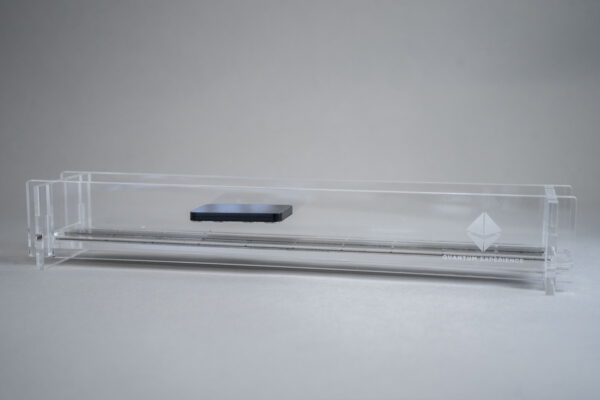
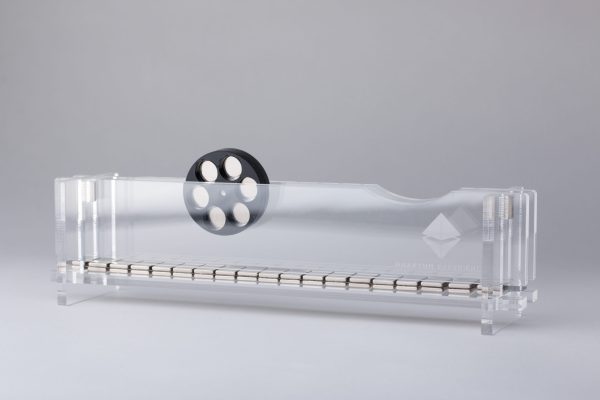

Which one, for which demo.
| You want to show | Kit | Price | Why |
|---|---|---|---|
| A magnet floating and moving along a track | DIY Maglev Desktop Toy | $69 | Built specifically for the levitating-puck effect, out of the box. |
| A science-fair board with a repeatable, documented setup | Magnetic Train Science Fair Kit | $69 | Same track mechanism, framed for a fair judge to follow. |
| Restocking, scaling up, or building your own track from scratch | Magnets & spare parts | From $0.60 | Just the magnets — Quantum Levitation–matched, no track included. |
| The actual superconductor levitation effect (needs liquid nitrogen) | See the which-kit guide | From $139 | A different, cryogenic effect — magnets alone won’t produce it. |
What people ask before buying just the magnets.
Do any of these need liquid nitrogen?
Are these the same magnets used in your superconductor kits?
Are these magnets safe for kids to handle?
What’s the difference between a magnet kit and a superconductor kit?
Ready to add magnets to your demo?
Five kits, none of them needing liquid nitrogen.
Magnets for kits & spare parts
Individual neodymium magnets and rings — the same parts used in our maglev tracks, sold separately for repairs, extensions and custom builds.
Building a school project with magnets alone? The magnetic levitation science project guide covers the physics of maglev trains and how to build one without any cryogenics.