
Quantum Levitation and locking magnets
Discover the best magnets for your quantum locking and quantum levitation projects.
What it does.
Exploring the Magic of Levitating Magnets
Magnetic levitation, or maglev, uses the power of magnetism to make objects appear to be suspended without any physical support.
Nd magnets are made from a specialized type of neodymium iron boron alloy (NdFeB), and are the perfect choice for levitation experiments thanks to their strong magnetic fields. They have a maximum energy product of over 50 megagauss-oersteds and can produce much larger magnetic forces than traditional ceramic magnets with the same dimensions. Nd magnets also possess exceptional coercivity, which is the ability to resist demagnetization, making them ideal for levitation applications.
Interesting facts about neodymium
- Neodymium is a chemical element. Its symbol is Nd, and atomic number 60.
- Neodymium is a soft silver-like rare earth metal
- Most of the neodymium used globally comes from China
- It was discovered in 1885 by an Austrian chemist called Carl Auer von Welsbach
- It melts at 1024 Celcius degrees
How Does Magnetic Levitation Work?
All types of Magnetic levitation are based on the repulsion between two magnets, one that is stationary and another in motion. When both magnets have the same poles pointing towards each other, they push away from each other. This force of repulsion is what allows them to be suspended in mid-air without any physical contact or support.
Levitation using permanent magnets is not stable. The levitating object will tend to jump away or rotate to align itself with the field of the stationary magnet. This can be solved mechanically with supporting side walls. A good demonstration for such system can be seen here:

Another way to achieve stable magnetic levitation is using superconductors. Superconductors exhibit two unique magnetic properties: the Meissner effect and magnetic flux pinning. A superconductor can be locked mid-air in a surrounding magnetic field. The strong magnetic field produced by Nd magnets is the perfect surroundings for superconducting magnetic levitation experiments.
What Are Some Examples of Magnetic Levitation Devices?
Magnetic levitation can be applied to a wide range of products ranging from high-speed trains and medical imaging systems to home decor and toys. Examples of magnetic levitation devices include maglev trains, MRI machines, hoverboards, bobble heads, spinning top Toys and even jewelry stands.
What’s in the box, and what isn’t.
- IncludedQuantum Levitation and locking magnets
- IncludedUser manual and setup guide
- IncludedPlastic tweezers
For handling the superconductor while cold
- You supplyLiquid nitrogen
≈0.5 L per demonstration · $1–3 per litre
- You supplyShallow tray or dewar
Never a sealed container
- You supplyCryogenic gloves and eye protection
Standard for any LN2 handling
- SKU
- 9-6
| Size | 10*10*5 mm, 18*18*12 mm |
|---|
Sourcing, cost and safety — plus a risk-assessment template for your safety officer.
Ordering more than one?
Departments buying six or more get volume pricing and a single consolidated invoice. Quotes in one business day, purchase orders accepted, tax documentation on request.
Often bought with.
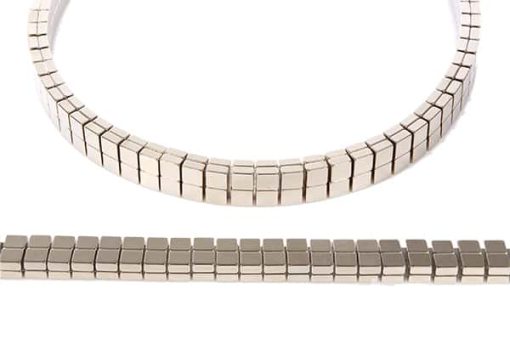
DIY MagRail
Build your own Magnetic Rail maglev track! Use super-strong NdFeB magnets to…
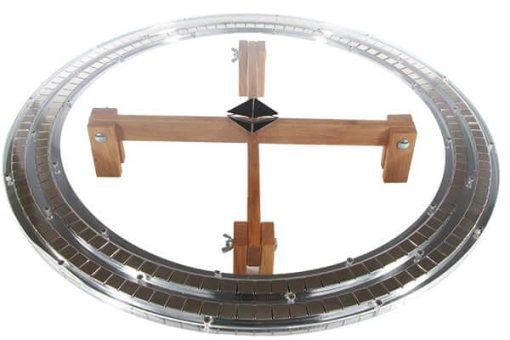
Round Maglev Track (Ø72 cm, Ø28.3'')
Perfect for large audience demonstrations,the track uses super-strong NdFeB magnets in a unique…
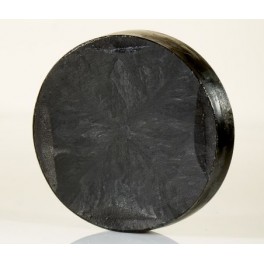
YBCO Bulk Meissner Levitation Disk 14mm⌀
Superconducting single domain YBaCuO levitation disk with ability to trap magnetic field.…